Foot pain and plantar fasciitis have a way of stopping you in your tracks. Thankfully, a few strategic habits and a visit to an AlignLife chiropractor can help you get back on your feet.
That first step out of bed shouldn’t feel like stepping on a tack.
If you’re struggling with plantar fasciitis, you’re not alone—about 1 in 10 people will face this “stabbing” foot pain in their lifetime. But if you’ve tried resting and icing with no luck, it’s because you aren’t addressing the root cause.
At AlignLife, we don’t just look at your foot; we look at the entire kinetic chain and how your spine, hip, knee, and foot all play a part. Here is how to stop the pain and reclaim your mobility naturally.
What is Plantar Fasciitis?

The plantar fascia is a thick band of connective tissue that runs across the bottom of your foot, connecting your heel to your toes. It acts as a high-tension shock absorber. When the tension becomes too great, small tears occur, leading to chronic inflammation and a painful condition called plantar fasciitis.
Common Causes of Inflammation
- Overuse & Activity: High levels of impact, especially long-distance running or long periods of standing without rest.
- Mechanical Tension: Tightness in the Achilles tendon or calf muscles that pulls on the fascia.
- Structural Strain: Excess pressure on the feet due to pregnancy or weight gain.
- Poor Support: Wearing soft shoes or flat-bottomed footwear (like flip-flops) without arch support.
It’s important to note, not all foot pain is inflammatory. Some people are predisposed due to anatomical structures like high arches or flat feet. In cases of tissue degeneration rather than just inflammation, the condition is known as plantar fasciosis.
Why Does My Foot Pain Flare Up?
Plantar fasciitis is notoriously unpredictable. Pain typically flares with too much OR too little activity. Here are a few common scenarios:
- The Morning Trap: After sleep, the fascia stiffens. Those first steps in the morning are often the most painful because you are stretching a “cold,” tight band of tissue.
- The “Delayed” Pain: You might feel fine while walking or running, only to have the pain flare up the moment you stop moving.
- The Internal Environment: Because this is an inflammatory condition, things like sugar, processed foods, and dehydration can increase your sensitivity to flares.
3 Targeted Exercises for Immediate Relief
To heal naturally, you must improve the flexibility of the fascia and the muscles connected to it. Try these three 5-minute exercises daily:
1 | Iron Out the Tension with the Arch Roll Massage
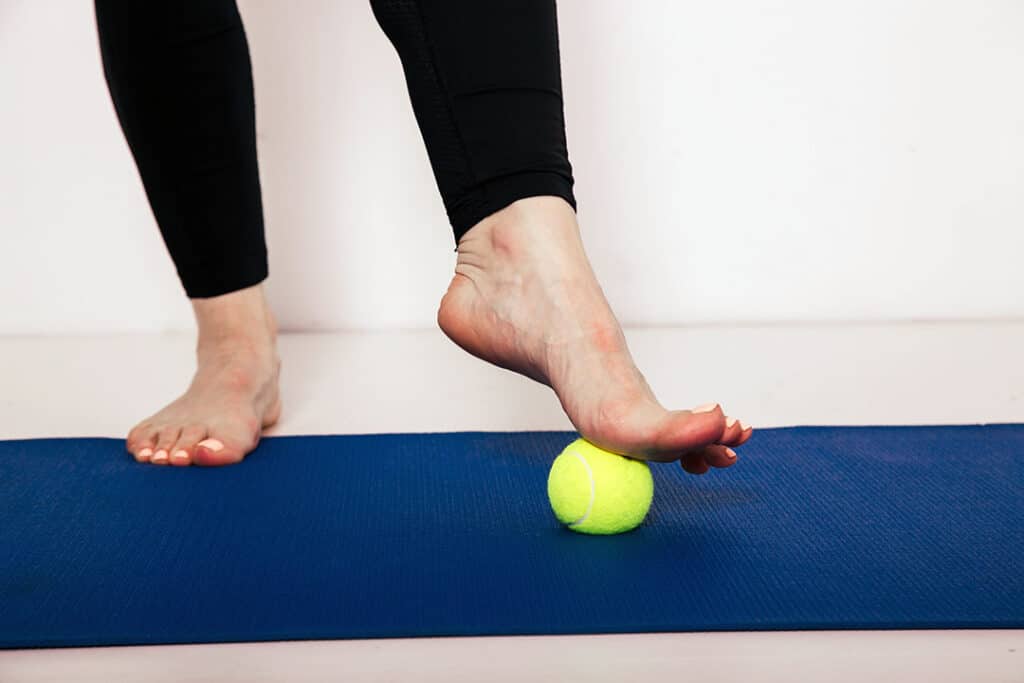
One of the most commonly used exercises for plantar fasciitis is rolling your foot over a tennis ball. This exercise “irons out” that stiff and inflamed fascia, flushes the area with healing blood flow, and eases the pain.
How to do it: While seated, place a tennis ball or a frozen water bottle under your arch. Roll it back and forth for 2 minutes with moderate pressure.
Pro-Tip: A frozen bottle provides “cold therapy” to numb inflammation at the source.
2 | Build Fascia Resilience with High-Load Heel Raises
Modern research has identified this exercise (the Rathleff Protocol) as the “Gold Standard” for long-term recovery. Unlike simple stretches, this move uses “controlled loading” to strengthen the plantar fascia itself. By teaching the tissue to handle your body weight again, you move past temporary relief and into permanent healing.
How to do it: Stand on the edge of a stair or a sturdy block with your heels hanging off. Place a rolled-up towel under the toes of your affected foot so they are bent upward. Slowly rise up on your toes for 3 seconds, hold the top position for 2 seconds, and then slowly lower your heel back down below the step level for 3 seconds.
Pro-Tip: Focus on the “slow” movement. The 3-second descent is where the most significant tissue repair happens.
3 | Release the Chain with Targeted Calf Stretches
Tight calf muscles are often the hidden “root cause” of plantar fasciitis. Because your calves are connected to your heel via the Achilles tendon, any tightness there creates a constant upward “tug” on your plantar fascia. Stretching the calves effectively releases that tension and allows the fascia to finally rest and heal.
How to do it: Stand facing a wall with both hands pressed against it for support. Step your affected leg back, keeping the knee straight and the heel firmly on the ground. Lean forward into your front (unaffected) leg until you feel a deep, satisfying stretch along your back calf and heel. Hold for 30–45 seconds and repeat 3 times.
Pro-Tip: Keep your back foot pointed straight ahead. If your toes turn outward, you lose the “pull” on the specific muscles that affect your foot pain.
How long does plantar fasciitis last?
For some, plantar fasciitis comes and goes. For others, it lingers on endlessly. Most people report relief after 3-12 months. However, you can speed up this process by managing your plantar fasciitis pain with chiropractic care, proper foot care, and healing supplements.
How Chiropractic Care Helps Fix the Root of Plantar Fasciitis

Many people are surprised to learn that a chiropractor can treat foot pain, but chiropractic care offers one of the most effective, non-invasive treatments for plantar fasciitis. At AlignLife, we don’t just look at where it hurts; we look at why it hurts.
Here is how the chiropractic approach transforms your recovery:
Targeted Adjustments for Foot & Ankle Mobility
Chiropractic care directly reduces stress and inflammation by restoring proper motion to the 26 bones in your foot. Your chiropractor performs specific adjustments to the foot bones, heel, and ankle to reduce unnecessary mechanical pressure. These treatments relax the fascia, quiet the pain, and help prevent the microscopic tears that lead to chronic inflammation.
Addressing the "Kinetic Chain" Imbalances
Oftentimes, plantar fascia pain doesn’t start in the foot—it starts in the calves, knees, or even the spine. If your hips or knees are misaligned, your gait (the way you walk) changes, forcing your feet to absorb impact in ways they weren’t designed to. By correcting these musculoskeletal imbalances, we address the root causes of the strain and reduce the inflammation, allowing the pain to be reversed and, more importantly, prevented from returning.
Promoting Whole-Body Healing & Re-Injury Prevention
Chiropractic care is about more than a quick fix; it’s about optimizing your body’s ability to heal itself. Adjustments improve blood flow and nervous system communication, providing the fascia and surrounding tissues with the nutrients they need to repair. Furthermore, your chiropractor helps you evaluate your posture and walking habits, ensuring you can move with comfort and confidence long after your symptoms have faded.
More Tips for Plantar Fasciitis Pain Relief
Along with chiropractic adjustments, your AlignLife chiropractor may also recommend some of these daily habits to help you reduce your pain faster.
Fuel Your Recovery with Anti-Inflammatory Support

Because plantar fasciitis is inflammatory, cooling the body from the inside out is essential. We recommend Aceva’s Mobility supplement. This powerful blend of turmeric, white willow bark, and frankincense helps neutralize inflammation and increase blood flow to the foot without the side effects of over-the-counter pain meds.
Knowing how to stretch is essential if you want to heal your plantar fasciitis naturally. This daily habit helps loosen the tight fascia, which can help prevent tearing and pain. It also helps strengthen the muscles of the feet to better support your overall foot health.
Your AlignLife chiropractor will walk you through how to stretch your foot daily, based on the root cause of your pain.
How to do it: For general stretching, be sure to stretch enough that you feel the stretch, but not so hard or intense that it causes pain. Stretch the toes, the sole, and the calves. Try to work in a 5-minute stretch first thing in the morning, a couple of times throughout the day, and before bed.
Protect Your Foundation with Custom Orthotics
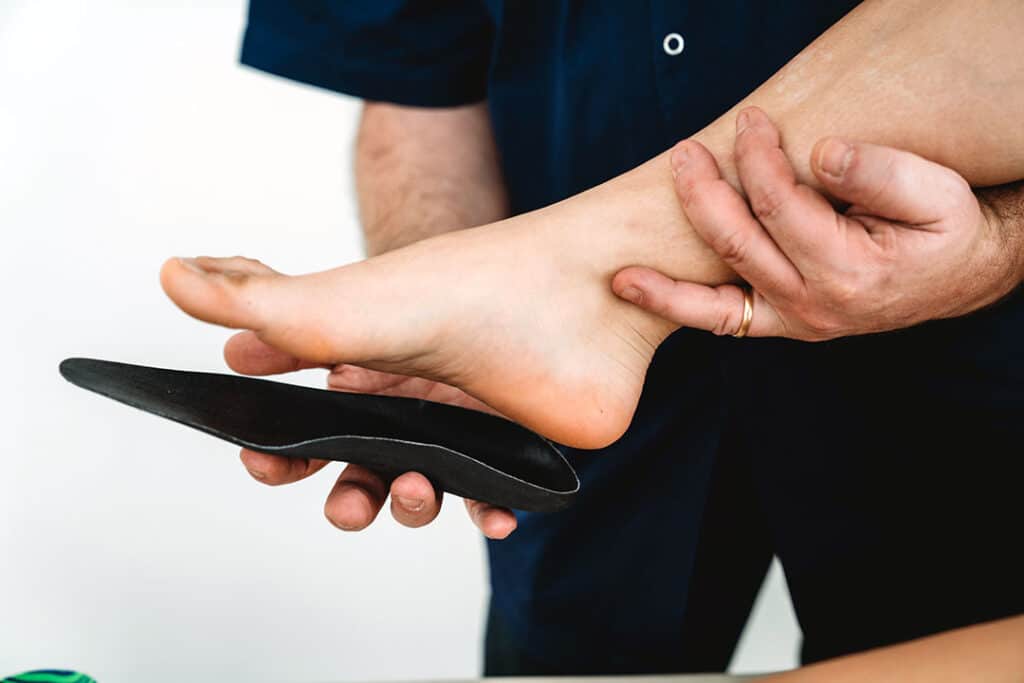
Wearing the wrong shoe can make your pain worse. Avoid shoes that are too tight, have pointed toes, or lack arch support (like flip-flops). At AlignLife, we use 3D foot scanning technology to create custom orthotics. Unlike store-bought inserts, these are designed for your unique foot structure to ensure your arches are supported with every step.
Take the First Step Toward Pain-Free Living

Plantar fasciitis doesn’t have to dictate your lifestyle. Whether your pain is a casual annoyance or a severe limitation, chiropractic care can help you stop the stabbing pain and move forward with confidence.
Schedule a visit with your local AlignLife chiropractor today to start your journey and heal plantar fasciitis for good.