Poor posture can silently strain your spine and trigger chronic neck or back pain. The good news? You can start improving alignment today with simple posture tests, targeted exercises, and desk adjustments that relieve tension fast.
Most people don’t realize how much posture affects their daily energy, breathing, and pain levels. What starts as slouching at a desk can quietly turn into chronic neck tension, lower back pain, or recurring headaches.
But here’s a fact that many don’t realize. Research on one of the most common posture mistakes, tech neck or forward head posture, shows that while the human head weighs about 10–14 pounds in neutral alignment, each degree of forward tilt increases the effective load on the cervical spine.
At a 60-degree forward tilt — a posture many people adopt when using phones or laptops — the stress on the neck may be equivalent to supporting up to ~60 pounds of force.
When you realize how much extra strain your neck may be carrying, it becomes clear that posture isn’t just about appearance — it’s about alignment.
What Causes Poor Posture?
More people are suffering from bad posture now than ever before. Sedentary lifestyles are most likely to blame. We often spend more time sitting at a computer, watching TV, driving in our cars, and lounging around on the sofa than using our core, back, and shoulder muscles.
Like every other muscle in your body, lack of use means they start to atrophy and aren’t strong enough to do their jobs. In this case, weak core muscles will gradually pull the body out of alignment.
Common Signs & Mistakes That Lead to Poor Posture
These patterns place uneven stress on your spine and often worsen gradually if not corrected.
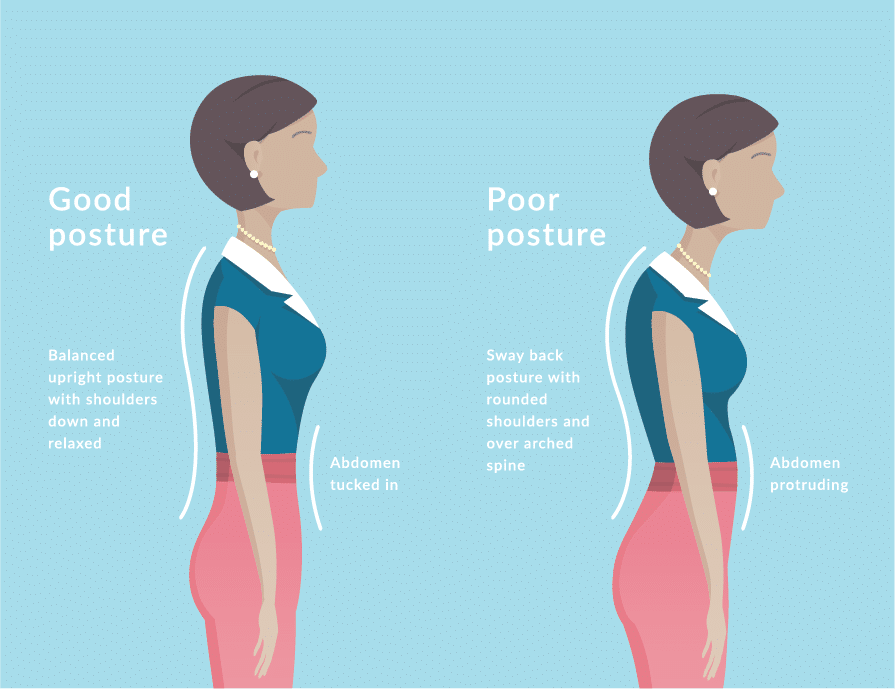
- Rounded shoulders (often caused by long hours at a desk)
- Forward head posture (head jutting in front of shoulders)
- Anterior pelvic tilt (exaggerated lower back curve or “potbelly” appearance)
- Locked or bent knees when standing
- Slouching while sitting or walking
Quick Posture Fixes You Can Try Today
The encouraging part? Small adjustments made consistently can begin reversing these patterns faster than most people expect.
- Align your ears over your shoulders when sitting or standing.
- Engage your core lightly throughout the day.
- Adjust your monitor to eye level.
- Take a movement break every 30–60 minutes.
- Practice chin tucks and shoulder blade squeezes daily.

Health Issues Caused by Bad Posture
Another sign that you may need to improve your posture is health conditions. Many health conditions stem from other problems in the body – especially if a subluxation is causing nerve interference.
Signs Your Posture May Be Causing Problems
- Headaches and migraines
- Back and neck pain
- Digestive issues
- Breathing problems
- Lack of balance and endurance
- Inability to walk or move properly
- Body aches and pains
- Muscle fatigue
How to Do a Quick Posture Test
RELATED ARTICLE: Curves Matter: Does Your Spine Pass the Test?
Because it can affect your overall health, correcting and maintaining good spine health should be a top priority.
Good posture doesn’t always feel correct, however… especially if you’ve been in the habit of slouching and sitting poorly for years.
If you want to test whether you have good or bad posture, here’s a quick and easy method you can do at home. (Note: you might need someone’s help to take a picture or help measure).
- Stand with your head, shoulders, and buttocks against a wall. Your heels should be about 4-6 inches from the wall.
- Slide your hand between the small of your lower back and the wall. You can also have someone measure the space for you. Do this for the space behind your neck as well.
- If the measurement is greater than 2 inches or you have a lot of space surrounding your hand, you likely have too much curve in your spine. If there isn’t enough space, you might not have enough curve in your spine.
Tips to Help You Stand and Sit with Good Posture

Good Standing Posture
- Focus on standing straight and tall with your shoulders back.
- Keep your head in line with your body (your ears should line up with the middle of your shoulders).
- Activate your core muscles and pull in your abdomen.
- Place your feet shoulder-width apart.
- Keep knees bent and flexible.
- Shift your weight so it is primarily on the balls of your feet.
- Let your hands hang naturally at your sides.
Good Sitting Posture
- Sit up with your back straight and shoulders back.
- Make sure your buttocks are touching the back of your chair.
- Keep your feet flat on the ground.
- Keep your head in a neutral position with your chin parallel to the ground.
4 Easy Ways to Improve Your Posture

Most of us could benefit from putting some posture-improving techniques into practice. These will not only help you improve your spine health but also help you maintain it. Try out one or more of these today and take another step closer to reaching optimal spine health. The more you make a habit out of these posture-correcting exercises, the quicker you’ll see their effects on your body and health overall.
1) Perform exercises to strengthen your back and core.
One of the best ways to improve your posture is to strengthen your core muscles. This includes your abdominal muscles and low back muscles. Take a look at some of our favorite exercises to build core strength.
RELATED ARTICLE: Best Exercises to Build Core Strength
2) Take breaks to move around if you sit frequently.
Any time you sit in one position can be tiring on your body. Taking frequent stretch breaks or even getting up from your desk for a quick walk or at-desk workout can help improve your posture.
RELATED ARTICLE: Exercises You Can Do at Your Desk
3) Practice yoga or stretch daily.
Stretching and yoga also help relieve muscle tension. This helps keep your muscles from reverting back to old bad habits and sets you up to correct your body posture easier.
RELATED ARTICLE: The Best Stretches For Posture Support and Flexibility
4) Make sure you set your desk up properly.

Sitting poorly at your desk causes the pelvis to rotate backward and triggers lower back pain. It also forces your head forward and your shoulders to curve causing neck pain, headaches, and numbness in the hands. All of this unnecessary stress on your muscles and joints can cause more pain and inflammation. Avoid the all-to-common workspace slump by following these tips to set up your desk:
- Invest in proper back and arm support.
- Set your chair height to 16-20” from the ground.
- Make sure your desk height is 25-30”.
- Position your monitor so the top of the screen is at eye level.
Frequently Asked Questions About Posture
How long does it take to fix bad posture?
With consistent effort, many people notice improvement within a few weeks, though long-standing imbalances may take longer.
Can poor posture cause headaches?
Yes. Forward head posture and rounded shoulders can increase strain on neck muscles, which may contribute to tension headaches.
What is the fastest way to improve posture?
Strengthening core muscles, adjusting your workspace, and becoming aware of alignment throughout the day are the fastest starting points.
How Chiropractic Can Help with Good Posture
Another great way to improve your posture long-term is chiropractic care. Research shows spinal alignment and muscle balance both play key roles in posture. A spinal evaluation can help identify joint restrictions or muscle weaknesses contributing to poor alignment.
Need more tips on how to improve your posture quickly and naturally?
If posture pain is affecting your daily life, a spine health evaluation can help determine the next best step. Contact your local AlignLife Chiropractor today for a quick spine health check and personalized plans for helping you reach your health goals.